
Swan Chair
Arne Jacobsen, Fritz Hansen
Arne Jacobsen designed the Swan in 1958 for the lobby and lounge areas of the SAS Royal Hotel in Copenhagen, alongside the Egg. The chair contains no straight lines: a moulded shell on a star-shaped swivel base, organic and soft despite its strong architectural appeal.
| Designer | Arne Jacobsen (1958) |
|---|---|
| Maker | Fritz Hansen, Denmark |
| Model | 3320 |
| Materials | Moulded CombiPUR shell; satin polished aluminium star-shaped swivel base |
| Dimensions | 77 cm high x 74 cm wide x 68 cm deep; seat height 40 cm (high version 48 cm also available) |
| Upholstery | Wide range of textiles and leathers |
| Price | GBP 3,399 as configured at Haus London, an authorized Fritz Hansen retailer |
| Availability | In production; available through Fritz Hansen and authorized dealers |
Editorial link to the maker's official site, opening in a new tab. Not a paid placement.
Why Estate & Design selected it
The Swan is the Egg's more sociable sibling. Where the Egg turns away, the Swan opens up, making it the better chair for conversation areas, hotel lobbies and sitting rooms where people actually face each other. In an estate it suits the drawing room as naturally as the Egg suits the corner.
Estate & Design is not a retailer. Details were verified against the maker or publisher at the time of publication; availability and pricing may change.
Related stories
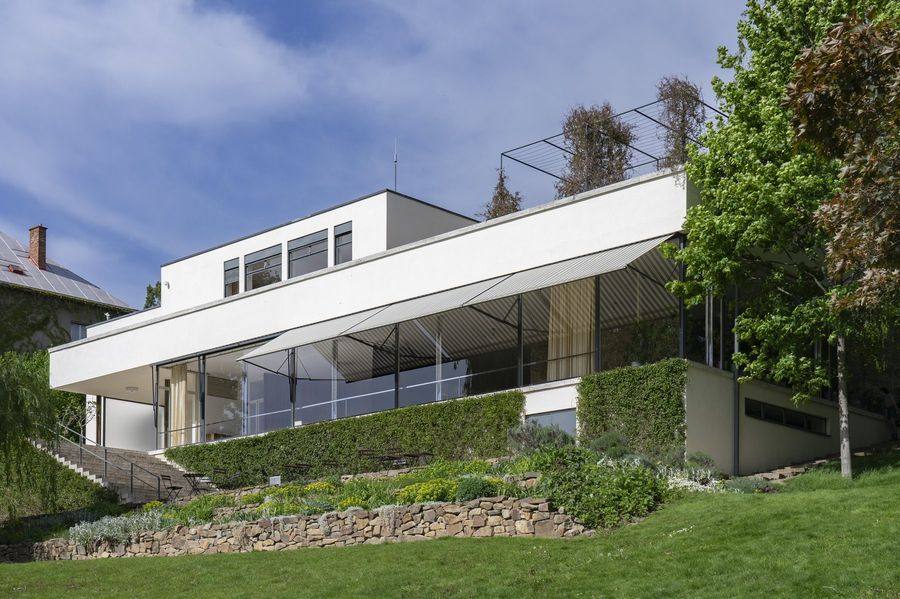
Estates
Villa Tugendhat: Mies van der Rohe's Uncompromising House in Brno
Completed in 1930 for the textile manufacturer Fritz Tugendhat and his wife Grete, this steel-framed villa in Brno redefined what a house could be, and then spent the next eighty years surviving history.
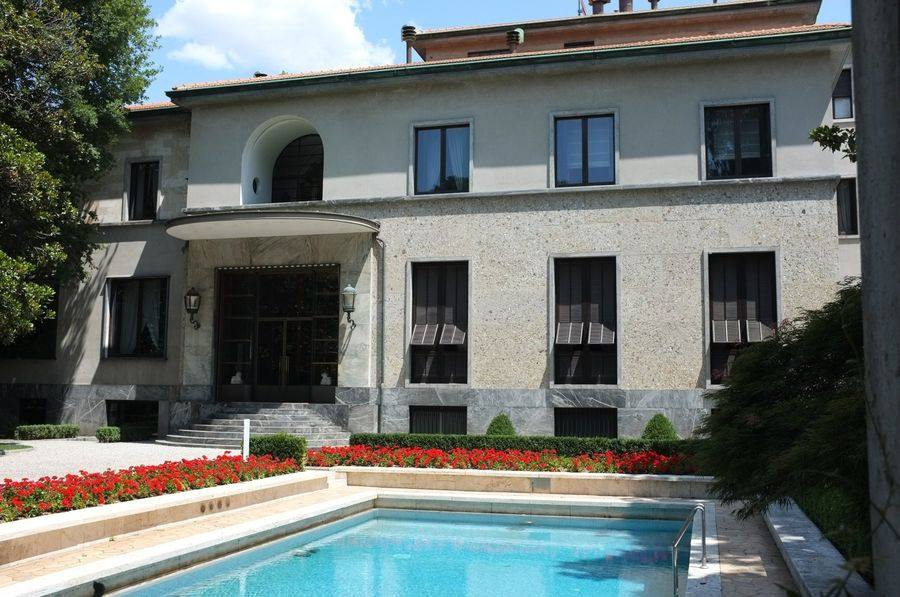
Estates
Villa Necchi Campiglio: Milan's Quiet Statement in Stone and Brass
Behind a deliberately plain street wall in Milan, Piero Portaluppi built one of the great bourgeois villas of the 1930s, later layered by Tomaso Buzzi and preserved intact by the FAI.

Estates
Katsura Imperial Villa: The Estate Without an Architect
On the western bank of the Katsura River, a seventeenth-century princely retreat shaped modern architecture without ever naming a designer. Its choreography of buildings, water, and path remains the standard.