

Arco Floor Lamp
Achille Castiglioni and Pier Giacomo Castiglioni, Flos
The Castiglioni brothers designed the Arco in 1962 around a simple problem: how to bring overhead light to a table without touching the ceiling. Their answer was a two-metre arc of stainless steel balanced by a block of Carrara marble heavy enough to hold it steady.
| Designer | Achille Castiglioni and Pier Giacomo Castiglioni (1962) |
|---|---|
| Maker | Flos, Italy |
| Materials | Carrara marble base with lifting hole; satin stainless steel telescopic stem; pressed and polished aluminium shade |
| Dimensions | 1850 mm wide x 2200 mm long x 2400 mm high (maximum); 64.11 kg |
| Versions | Arco (incandescent) and Arco LED (2700K, dimmable) |
| Price | USD 4,095 at TRNK, an established design retailer (Flos publishes no list price) |
| Recognition | ADI Compasso d'Oro Product Lifetime Achievement Award 2020; held in the permanent collection of MoMA |
Editorial link to the maker's official site, opening in a new tab. Not a paid placement.
Why Estate & Design selected it
The Arco is one of the rare designs that solved its problem so completely that nothing has replaced it. It lights a dining table, a reading chair or a whole corner of a room, and the marble base has become a sculptural object in its own right. Sixty years on, it still looks inevitable.
Estate & Design is not a retailer. Details were verified against the maker or publisher at the time of publication; availability and pricing may change.
Related stories
Estates
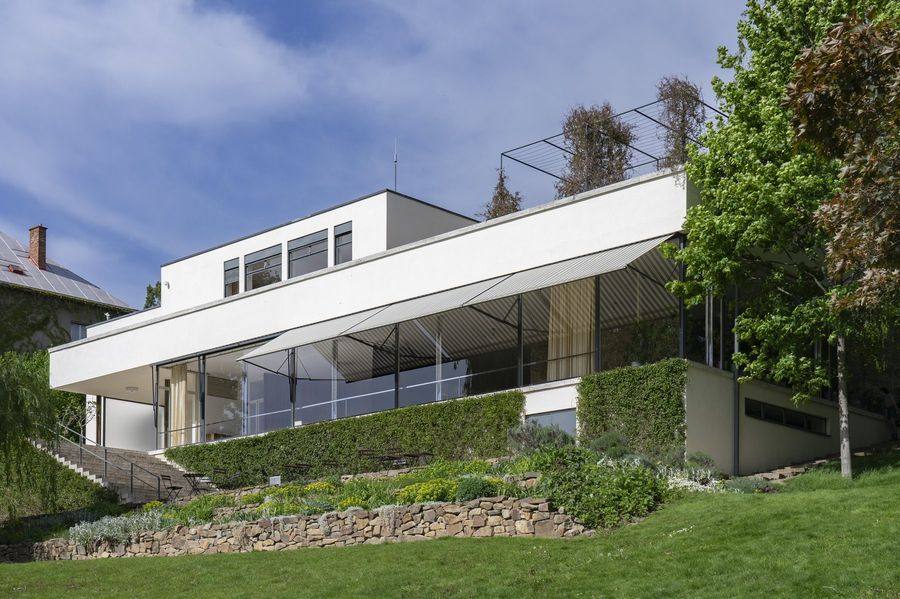
Villa Tugendhat: Mies van der Rohe's Uncompromising House in Brno
Completed in 1930 for the textile manufacturer Fritz Tugendhat and his wife Grete, this steel-framed villa in Brno redefined what a house could be, and then spent the next eighty years surviving history.
Estates
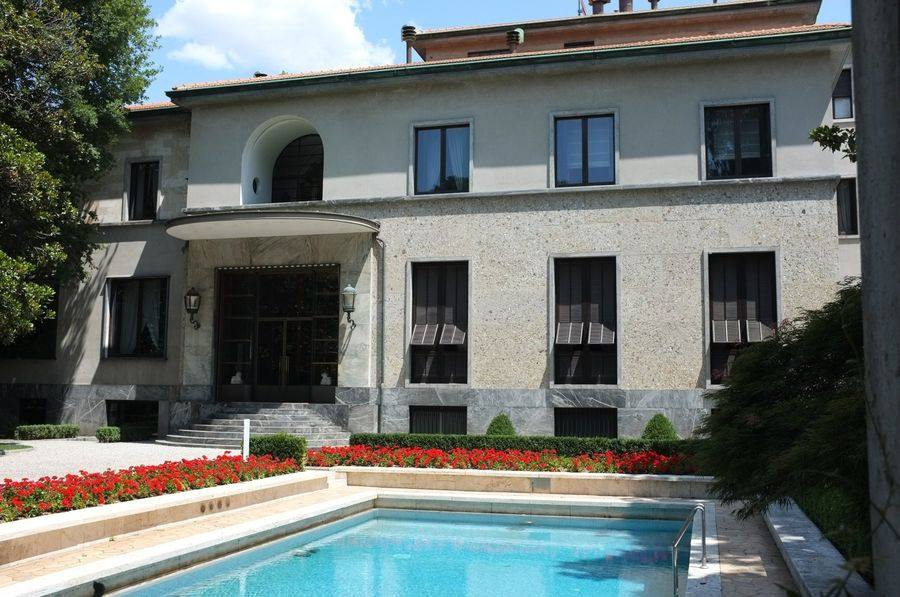
Villa Necchi Campiglio: Milan's Quiet Statement in Stone and Brass
Behind a deliberately plain street wall in Milan, Piero Portaluppi built one of the great bourgeois villas of the 1930s, later layered by Tomaso Buzzi and preserved intact by the FAI.

Estates
Katsura Imperial Villa: The Estate Without an Architect
On the western bank of the Katsura River, a seventeenth-century princely retreat shaped modern architecture without ever naming a designer. Its choreography of buildings, water, and path remains the standard.